Le journal de piste
Category: Travel
Field notes · Our journeys
Travel Defender: our off-road adventure journals
Every trip here is told the way we lived it, from inside our travel Defender 130: the tracks, the wild camps, the breakdowns, the people we met along the way. Stories, photographs and films brought back from the field, with enough hard information to plan your own.
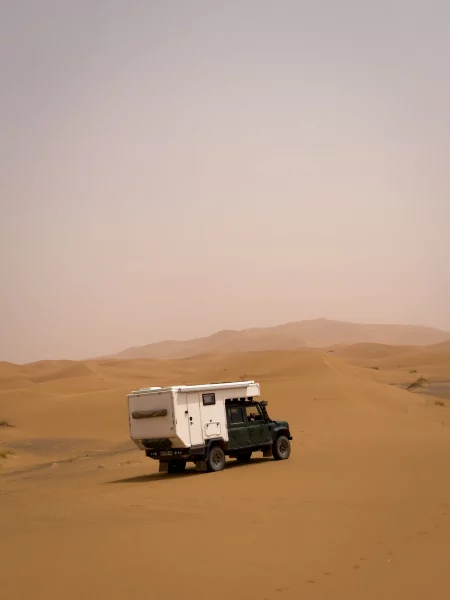

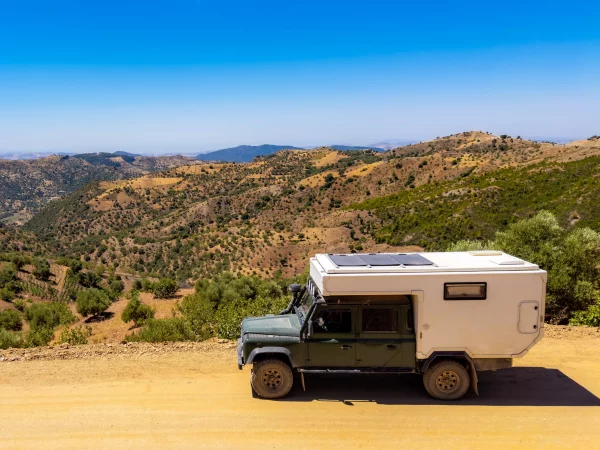
Gallery · click to enlarge
What you’ll find in our travel Defender journals
We only write about what we’ve actually driven. Each story starts as a notebook kept on the road, between two stages, usually in the evening at camp once the dust has settled. You’ll find the landscapes, of course, but also the rest of it: the track that fades into nothing, the crossing you sit and stare at before committing, the evening spent replacing a hose by headlamp.
That mix is what makes a trip worth telling. Overland travel is within reach of anyone, but it asks for preparation. That’s what we try to pass on here, without dressing it up.
Where the main roads stop, our travel Defender keeps going
Desert crossings, passes above 2,000 metres, coastal tracks running through sea spray, cedar forests and villages clinging to bare rock. Our routes take us past the point where the main roads give up, often just a few kilometres from the classic tourist loops, and yet in a completely different world.
From Morocco to Sardinia, from the Alps to wild Spain, every destination has its own logic: its season, its terrain, its camping rules. We break them down one by one, because a good travel Defender trip always starts with understanding where you’re putting your wheels.
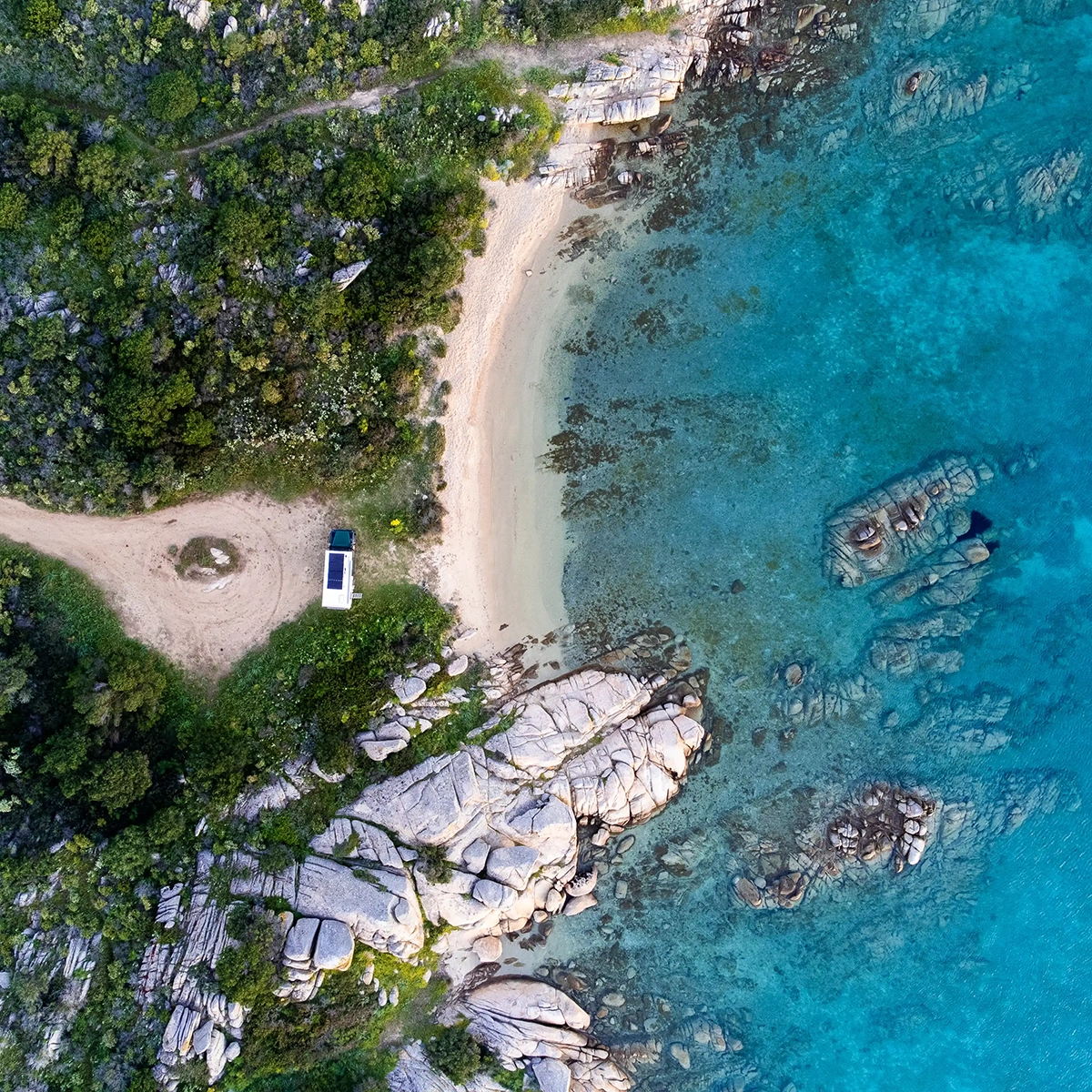
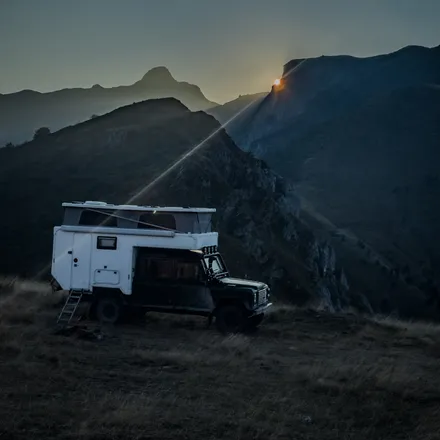
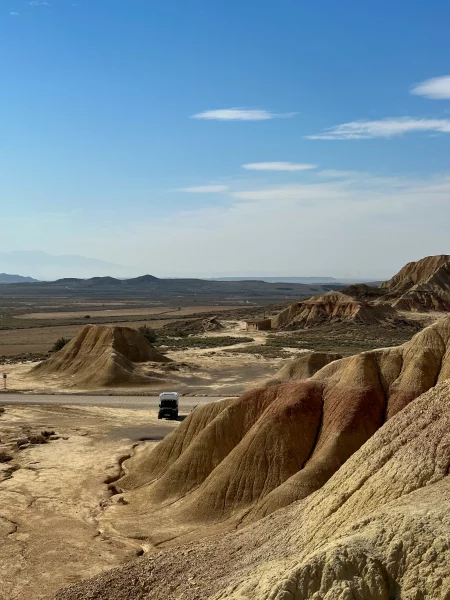
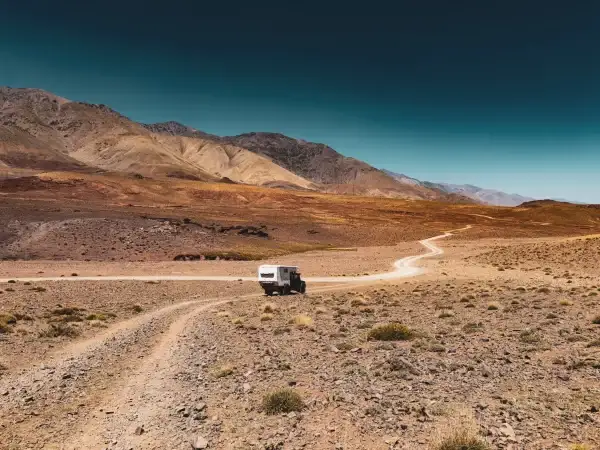
Gallery · click to enlarge
By destination
Where our travel Defender has taken us
Morocco
Seventy-four days and 8,000 km, from the Sahara to the Atlantic. Our biggest trip so far: dunes, gorges, the High Atlas and the coast, with the logistics and the harder realities told straight. It’s all in our Morocco journal.
Sardinia
1,500 km of tracks and forgotten lanes, between nuraghi, abandoned mines and empty coves. The full account sits in our Sardinia journal.
The Alps
750 km of passes and old military roads straddling the French and Italian border. Views you have to earn, and camps facing the summits.
Spain
The Bardenas, the Pyrenees and the cliffs of Aragon. Close to home, open most of the year, and the ideal place for a first self-sufficient travel Defender trip.
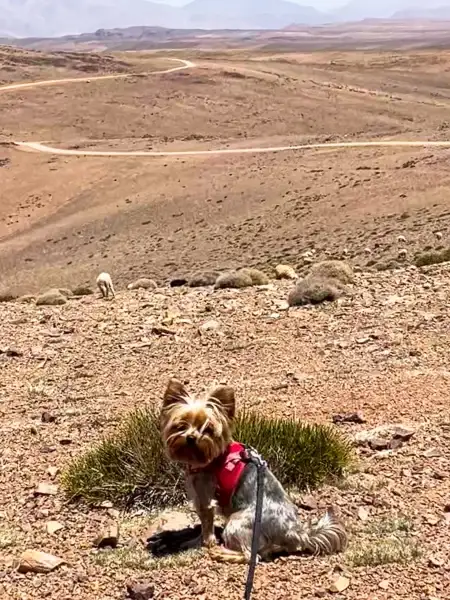

Pixie, our compass
Who we are
Sophie and Julien, plus Pixie, our Yorkshire, who sleeps in the cabin at every camp. Julien is a mechanic and rebuilt our Defender 130 from the chassis up. Sophie handles the photography, the film and everything that gets told afterwards.
We travel for authentic routes and forgotten tracks, not to tick off countries. That’s part of why we share all this: because we’d have loved to read this kind of account before our first departures.
Everything you need for your own travel Defender trip
From choosing your gear to reading a difficult crossing, our reports cover the practical side of travel Defender life. No theory: what we write, we’ve tested, sometimes the hard way.
- Vehicle prep: tyres, ground clearance, water and fuel range, the wear parts worth carrying.
- Navigation: offline GPX tracks, apps that work without a signal, reading the terrain ahead.
- Wild camping: where it’s tolerated, where it isn’t, and how to sleep soundly without bothering anyone.
- Real costs: what a month on the tracks actually comes to, ferry and fuel included.
- Mistakes to avoid: the ones we made, so you don’t have to make them too.
One last piece of advice that holds for any travel Defender journey: always allow more days than you think you need. It’s the one thing we regret on every single return.
On film
Travel Defender videos
Words don’t carry everything. The engine straining up a climb, the light on the dunes late in the day, the silence of a pass at dawn: some things have to be watched. Our films follow each journey stage by stage, with no spectacle in the edit.
Subscribe and write to us, we always reply. And if you prefer something you can hold, our finest camps are in the IntoTheWild magazine.
Our roadbooks, to drive these routes yourself
The stories make you want to go, the roadbooks get you there. Each one holds the complete GPS trace, the stages in order, the difficulties flagged, resupply points and the camps we tested ourselves. Nothing is drawn from a map: all of it was driven.
It’s the version we’d have wanted in our hands before our own first departure.
We answer everything
Travel Defender FAQ
Do I need a heavily prepared 4×4 for a first travel Defender trip?
No. A reliable 4×4 with decent ground clearance and the right tyres handles the vast majority of our routes. What matters first is servicing, a spare wheel and a bit of range in water and fuel. The genuinely technical sections are always flagged, with alternatives to bypass them.
What budget should I plan for?
It depends mostly on the destination and how you sleep. Allow roughly 800 to 1,500 euros a week for two in Sardinia, and 1,500 to 2,500 euros per person for three weeks in Morocco. Wild camping brings the total right down; the ferry and fuel are the bulk of it.
How long do you need to enjoy it properly?
Three weeks minimum for a big destination like Morocco, ten to fifteen days for Sardinia, a week for the Alps. Our most common mistake has been going too short: you end up driving five hours a day instead of three, and the whole point slips past you.
Can you travel with a dog in a Defender?
Yes, Pixie comes everywhere with us. Within Europe you need microchip identification, a European pet passport and a current rabies vaccination. Outside the EU, add a recent health certificate and, for the return leg, a rabies titre test carried out at least 30 days after the vaccination.
Where can I find the GPS tracks for your routes?
The journals tell the story, the roadbooks carry the trace. Each roadbook includes the full GPX file, detailed stages, flagged difficulties and camps tested on the ground. That’s where the precise coordinates live, and we don’t publish them openly.
When is the best season to go?
Spring and autumn for Sardinia and Spain, June to October for the Alpine passes once the snow has cleared, and the rest of the year for the Moroccan desert. In high summer we stick to the coast or to altitude. Whatever the season, check the forecast before committing to a track.
Your next travel Defender journey starts here
Read through the journals, watch the films, weigh up the destinations. Then pick yours. The adventure is only waiting on one thing: you turning the key.
-

Morocco roadbook: two years of tracks, soon in your hands.
It’s official, it’s live The Morocco offroad guide,in three roadbooks. Two years in the field, three routes, one Morocco offroad…
Lire le récit -
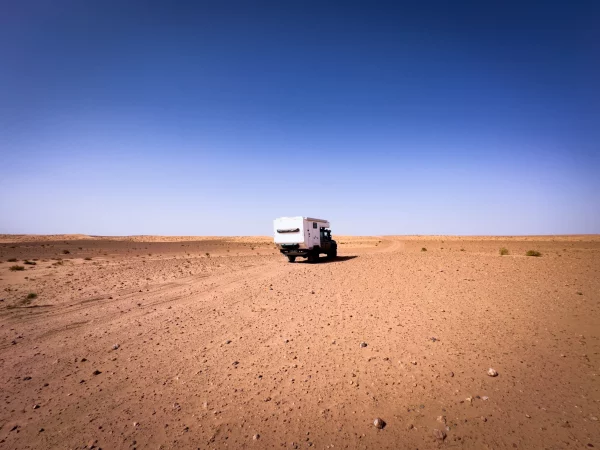
Morocco Desert, Atlas & Coastal Trails: 8000km 4×4 Adventure Across Diverse Terrains and Cultures
Field Notes · Africa Morocco Overland: 8,000 km of Tracks, Desert to Atlantic Our morocco overland adventure, unfiltered: 74 days,…
Lire le récit -

Corsica Road Trip: Our 1-Week 4×4 Itinerary (Cap Corse)
Travel journal · Corsica Corsica Road Trip: Our 1-Week 4×4 Itinerary An honest Corsica road trip, the way we actually…
Lire le récit -
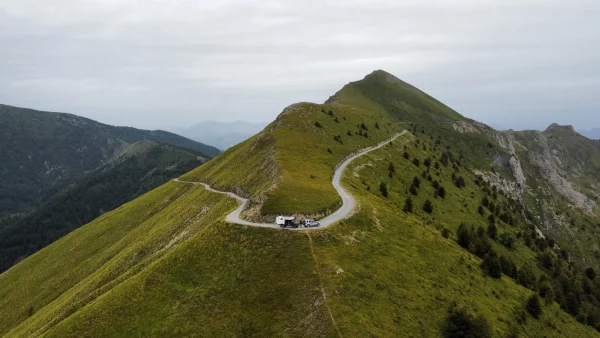
Via del Sale in 4×4
RouteLiguria to the Alps Toll€20 (book online) Best timeJune to October Max height2.50 m Travel journal · Italian Alps Via…
Lire le récit